


Roof Valley Repair: Signs Your Roof Valley Needs Attention
A roof valley is one of the hardest-working parts of any pitched roof. It is the channel where two slopes meet, which means it handles a large amount of rainwater whenever the weather turns wet. If that area starts to deteriorate, water can quickly find its way into the roof structure and the problems can become expensive.
Because roof valleys deal with so much runoff, even small defects should never be ignored. Cracks, lifted materials, corrosion, blocked debris or failed joints can all turn into leaks if they are left too long. For London homeowners, especially those with older roofs, knowing when roof valley repair may be needed can help prevent much more serious damage later on.
If the roof has already shown signs of drainage trouble, it is worth reading how poor gutter maintenance affects your roof and foundation, as poor water management around the roofline often goes hand in hand with problems in the valley area.
What does a roof valley do?
A roof valley sits where two roof slopes meet and channels rainwater down towards the guttering. Because it deals with concentrated water flow, it is more vulnerable than many other roof areas.
That is why roof valleys need to stay clear, watertight and properly supported. If materials begin to fail or debris builds up, the valley can stop performing as it should. Once that happens, water may begin backing up beneath tiles or finding weak points in surrounding materials.
Why roof valleys often start to fail
There is no single cause of roof valley repair, but some problems appear more often than others.
One common issue is simple ageing. Over time, valley linings and surrounding materials wear down under constant exposure to rain, debris and temperature changes. On older properties, some valleys may also have been patched before rather than repaired properly, which can shorten their lifespan.
Blocked debris is another frequent cause. Leaves, moss, twigs and dirt can collect in the valley and stop water draining away freely. If you have already had tree-related debris collecting on the roof, there is a natural internal link here to do overhanging trees damage your roof?.
Signs your roof valley may need repair
The warning signs are not always dramatic at first. In many cases, the early signs of roof valley repair are subtle.
Look out for:
- visible debris building up in the valley
- water overflowing or running in the wrong direction
- damp patches in the loft or on upstairs ceilings
- staining on internal walls near the roofline
- cracked, loose or slipped tiles along the valley edge
- visible corrosion or wear on metal valley materials
- moss build-up holding moisture in place
These problems often get worse gradually, which is why they are easy to overlook until the leak becomes obvious.
Why roof valley problems can lead to leaks quickly
A valley carries more water than many other parts of the roof, so even a small defect can have bigger consequences there than elsewhere.
If the lining has split, if water is being obstructed by debris, or if tiles have shifted along the edges, rainwater can start finding its way underneath the roof covering. That can lead to damp insulation, timber decay and internal staining.
If the issue follows stormy weather, this section should link naturally to how to spot roof damage after a storm, because storm debris and heavy rainfall often expose weak points in roof valleys.
What causes debris build-up in a roof valley?
Debris build-up is one of the biggest contributors to roof valley repair. Valleys naturally catch leaves, moss, seeds and small branches, especially if the property is close to trees or has uneven roof surfaces nearby.
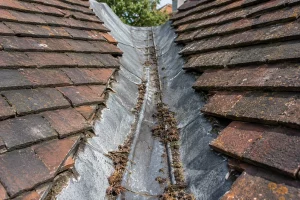
Once debris starts collecting, it can hold moisture in place and slow drainage. Over time, that raises the risk of deterioration in the valley lining and surrounding tiles. It can also increase the chance of overflow during heavy rain.
This is one reason why regular roof checks matter. If the valley is kept clear and small issues are spotted early, repairs are often simpler and less disruptive.
When roof valley repair is enough
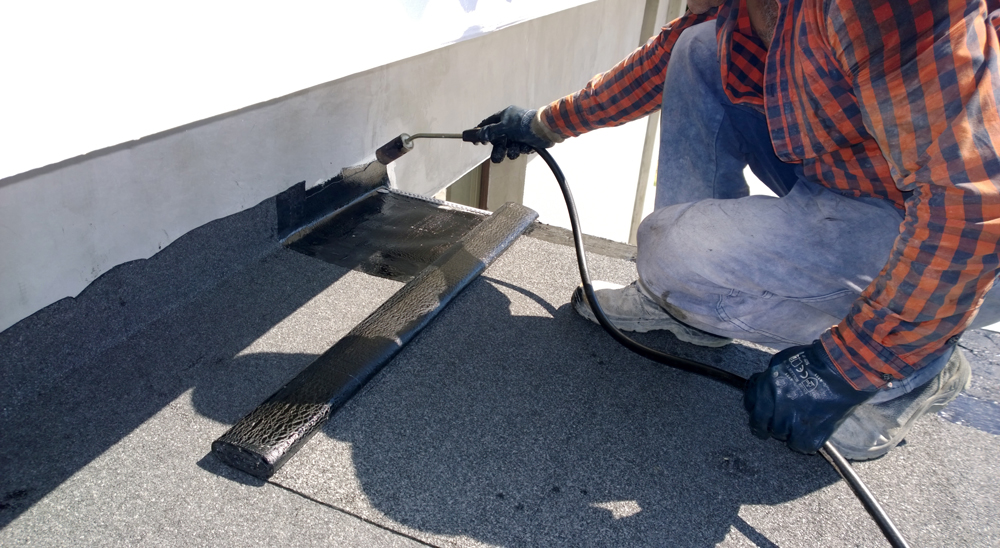
In some cases, a valley can be repaired without the need for wider roof work. That is more likely when the problem is localised and caught early.
Repair may be enough if:
- the blockage has not yet caused wider water damage
- one section of valley lining is failing but the rest remains sound
- a few surrounding tiles need resetting
- debris and moss have caused minor local wear only
- the structure beneath the valley is still in good condition
If the problem is found early, the repair can often be much more straightforward than homeowners expect.
When the problem may be more serious
Sometimes a valley issue points to wider roof deterioration rather than an isolated defect. That is more likely if leaks have been recurring for some time or if the surrounding roof materials also look worn.
At that stage, the roof may need a more detailed inspection to see whether the issue is limited to the valley or whether it has already affected underlay, battens or adjacent roof coverings. This is where an internal link to common roof repairs London: what every homeowner should know fits naturally, because valley failure often forms part of a wider repair picture.
Should a roof valley be repaired quickly?
Yes. Because of the amount of water that passes through it, a failing valley should not be left to worsen. Even if the leak inside the property still seems minor, the exposed area on the roof may already be deteriorating more than it appears from below.
Guidance from the National Federation of Roofing Contractors supports the importance of maintaining roof drainage paths and addressing vulnerable roof details before defects worsen. That makes a useful external reference here through NFRC guidance on pitched roof maintenance.
Final thoughts
A roof valley may not be the most visible part of the roof, but it is one of the most important. When it starts to fail, the effect on the rest of the roof can be fast and costly.
If you have noticed debris build-up, signs of leaks or visible wear where two roof slopes meet, it is worth getting the area checked sooner rather than later. Early roof valley repair is far easier and more affordable than dealing with the damage after water has already spread further into the property.
If you are unsure whether your roof valley needs attention, Rainy Days Roofing can inspect the roof and recommend the most suitable next step.