


Why Lead Flashing Fails and When It Needs Replacing
Lead flashing plays an important role in keeping a roof watertight. It is fitted around areas where the roof meets another surface, such as chimneys, walls, dormers and roof valleys. When it is installed properly and kept in good condition, it helps stop rainwater from getting into the property. However, many homeowners do not notice a problem until a leak appears. Understanding why lead flashing fails can help you act early and avoid more serious roofing damage.
In London, Greater London and Essex, lead flashing problems are common on older properties as well as roofs that have been repaired badly in the past. Weather exposure, age, poor workmanship and movement in the structure can all cause lead flashing to fail over time.
In this guide, we explain why lead flashing fails, the warning signs to look out for and when replacement is the right option.
What is lead flashing?
Lead flashing is a weatherproof material used to seal joints and gaps on a roof. It is most often found around chimneys, parapet walls, abutments, roof windows and other areas where water could work its way into the structure.
Because lead is flexible, durable and highly resistant to the weather, it has been used in roofing for many years. It is especially common on traditional British properties and remains one of the most effective materials for protecting vulnerable roof junctions.
Why lead flashing fails over time
There are several reasons why lead flashing fails. In some cases, it is simply due to age. In others, it is caused by poor installation or movement in the building. The important thing is identifying the real cause before carrying out repairs.
Why lead flashing fails because of age
Even though lead is long-lasting, it does not last forever. Over time, constant exposure to rain, temperature changes and general weathering can weaken the material. Older lead may crack, split or start lifting away from the surface it is supposed to protect.
This is one of the most common reasons why lead flashing fails on older homes in London.
Why lead flashing fails because of poor installation
Poor workmanship is another major cause. If lead flashing has not been installed correctly, it may not expand and contract properly with temperature changes. This can lead to stress, movement and eventual failure.
Common installation problems include:
- flashing cut too short
- incorrect fixings
- poor chase depth into brickwork
- lack of proper sealing
- badly formed joints
- using the wrong type or thickness of lead
When this happens, it is only a matter of time before water starts getting in.
Why lead flashing fails because of structural movement
Roofs and buildings move more than many people realise. Small shifts in the structure can put pressure on flashing around chimneys, walls and roof junctions. Over time, this movement can cause the lead to crack or pull away.
Structural movement is one of the hidden reasons why lead flashing fails, especially around chimneys on older terraced and semi-detached homes.
Why lead flashing fails because of weather exposure
Lead flashing is constantly exposed to the elements. Heavy rain, frost, wind and strong sunlight all have an effect over time. Repeated expansion and contraction can eventually weaken the material or disturb the way it sits against the roof and masonry.
In exposed locations, weathering can shorten the lifespan of even well-installed flashing.
Why lead flashing fails after temporary patch repairs
Sometimes lead flashing is patched instead of repaired properly. Temporary sealants, mastics or surface fixes may stop a leak for a short while, but they rarely solve the real problem.
This is another common reason why lead flashing fails again soon after earlier repair work. Once the underlying issue returns, the leak usually comes back with it.
Signs that lead flashing may be failing
If you know why lead flashing fails, it becomes easier to spot the warning signs before the damage becomes more serious.
Some of the most common signs include:
- damp patches on ceilings or walls
- water staining near chimneys or roof junctions
- visible gaps between flashing and brickwork
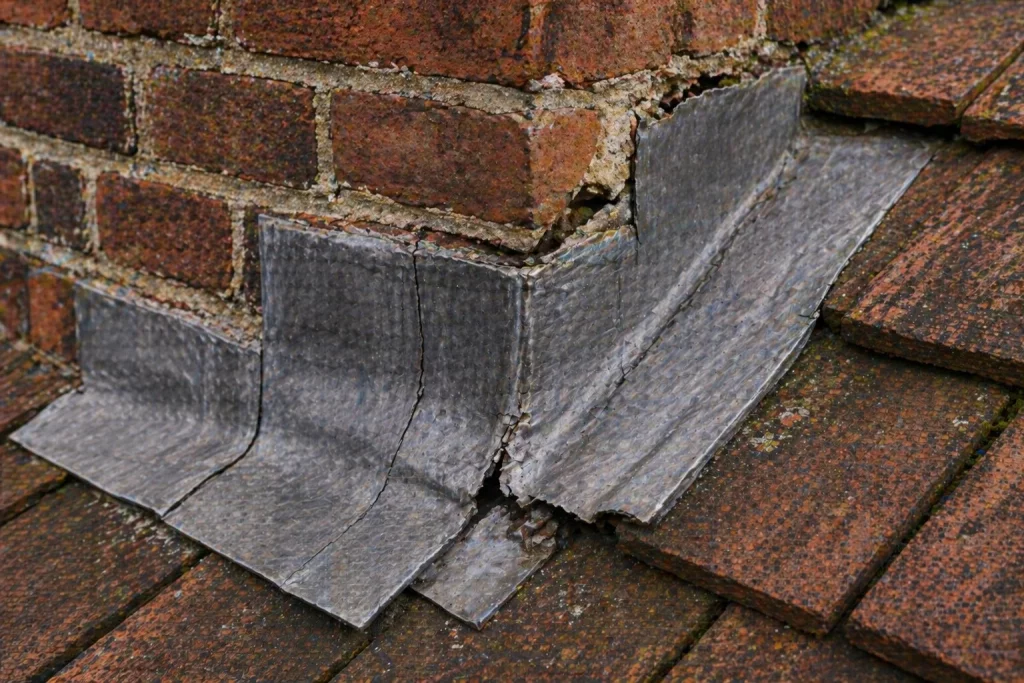
- cracked or split lead
- loose flashing lifting in the wind
- mortar around the flashing starting to break away
- repeated leaks in the same area
If you notice any of these problems, it is worth arranging a roofing inspection as soon as possible.
Where lead flashing usually fails
Lead flashing can fail in several areas of the roof, but some locations are more vulnerable than others.
Chimney flashing
Chimneys are one of the most common places for flashing problems. Movement in the chimney stack, ageing mortar and constant weather exposure all increase the risk of failure.
Wall abutments
Where a pitched roof meets a wall, flashing is needed to stop water entering the joint. If the flashing lifts, cracks or pulls away, leaks can follow quickly.
Roof valleys and junctions
Roof junctions direct a large amount of water, so failure in these areas can cause serious water ingress if left untreated.
Dormers and roof extensions
Any area where different roof sections meet can be vulnerable if the flashing is old, badly installed or under stress.
Can lead flashing be repaired?
In some cases, yes. Minor problems such as a small section lifting or a localised defect may be repaired if the rest of the flashing is still in good condition. However, it depends on the age of the lead, the extent of the damage and what caused the issue in the first place.
A repair may be suitable if:
- the damage is small and localised
- the lead is otherwise still sound
- the flashing has not reached the end of its lifespan
- there is no major structural movement affecting the area
That said, not every problem should be patched. If the flashing is old, split in several places or failing because of poor installation, replacement is often the better long-term solution.
When lead flashing needs replacing
There comes a point when replacing lead flashing is more sensible than repairing it. This is usually the case when the flashing has failed in multiple areas or when earlier fixes have not lasted.
Replacement is often the best option when:
- the lead is cracked or split in several places
- the flashing has come loose repeatedly
- previous patch repairs have failed
- the original installation was poor
- water is continuing to get in
- the surrounding mortar and detailing are badly deteriorated
If you are unsure whether repair or replacement is best, a professional inspection will usually make the right course of action clear.
Why replacing lead flashing can save money
Some homeowners try to delay replacement in order to save money. In reality, failing flashing often causes leaks that lead to bigger repair costs later. Water ingress can damage roof timbers, ceilings, plasterwork and decorations inside the property.
Replacing faulty flashing at the right time can prevent:
- ongoing roof leaks
- damage to internal finishes
- timber decay
- repeated call-outs for temporary fixes
- more expensive structural repairs later on
In many cases, a proper replacement is the most cost-effective solution in the long run.
Why lead flashing fails on London properties
Older London homes often have chimneys, party walls, parapets and roof details that depend heavily on lead flashing. As these properties age, flashing becomes more vulnerable to failure through a combination of weathering, movement and earlier poor-quality repairs.
That is one reason why lead flashing fails so often on period homes and older terraces across London, Greater London and Essex. Even when the rest of the roof looks sound, flashing can still become the weak point.
Professional lead flashing repairs and replacement
At Rainy Days Roofing, we deal with leaking and damaged flashing on properties across London, Greater London and Essex. Whether the problem is around a chimney, wall abutment or roof junction, we can inspect the area, identify why lead flashing fails, and recommend the most suitable repair or replacement.
If the flashing is still serviceable, we will advise accordingly. If replacement is the better option, we can carry out the work to a professional standard and help prevent future leaks.
Final thoughts on why lead flashing fails
Understanding why lead flashing fails can help property owners act before a small defect turns into a much bigger roofing problem. Age, weather exposure, poor workmanship and structural movement can all play a part.
If you have noticed signs of leaks, lifting lead or water staining around a chimney or wall junction, it is worth getting the roof checked sooner rather than later. A timely repair or replacement can protect your roof and save you money in the long term.