





How Autumn Debris Can Damage Roof Valleys and Guttering
Autumn debris may not look serious at first, but once leaves, twigs, moss fragments and seeds begin building up on a roof, they can start creating real problems. Valleys and guttering are especially vulnerable because they are the areas where water needs to move away efficiently. If debris starts collecting there, drainage slows down and water begins lingering where it should not.
For homeowners in London, Greater London and Essex, this is one of the most common seasonal roofing issues. A roof that seemed to be coping well in summer can start struggling once leaf fall increases and wetter weather becomes more regular. What begins as a simple build-up of organic debris can lead to overflowing gutters, blocked valleys, trapped moisture and eventually leaks.
If you have already read Autumn Gutter Problems: The Warning Signs Homeowners Should Not Ignore, this article builds on that by looking specifically at how debris affects two of the most vulnerable drainage areas on the roof.
Why valleys and guttering are especially vulnerable
Roof valleys and guttering both play a major role in moving rainwater away from the property.
A roof valley is the channel where two roof slopes meet, so it naturally carries a large amount of runoff. Guttering then takes that water from the roof edge and directs it into downpipes. Because both areas are designed to collect and move water, they are also the places where leaves and debris tend to gather first.
Once debris begins building up, it does not just sit there harmlessly. It slows the flow of water, holds moisture in place and can begin causing localised stress in the very parts of the roof that are supposed to stay clear.
What counts as autumn debris on a roof?
Autumn debris is not just fallen leaves. In roofing terms, it can include:
- wet leaves
- small twigs
- seeds and husks
- moss fragments
- dirt and silt
- broken organic matter from nearby trees
- debris washed down from higher roof slopes
When mixed with rainwater, this material becomes heavier, denser and more likely to compact into the drainage path.
How autumn debris can damage roof valleys
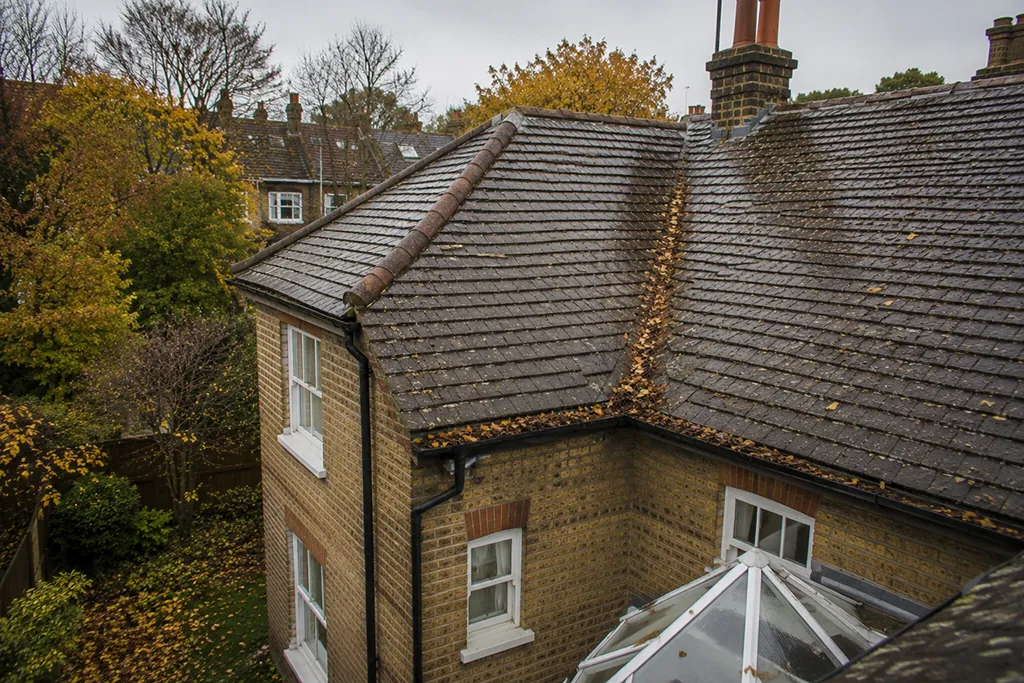
Valleys are one of the first places where autumn debris becomes a real problem. Because they channel water from two roof slopes into one narrow route, even a modest build-up can affect performance.
Debris in a valley can:
- slow down runoff
- trap moisture for long periods
- encourage moss and organic growth
- force water sideways beneath surrounding tiles
- add strain to valley linings and junctions
If a valley is already slightly worn, blocked debris can make the effect much worse very quickly. This is a natural place to link to Roof Valley Repair: Signs Your Roof Valley Needs Attention, because debris build-up is often one of the first warning signs that the valley is no longer coping properly.
How autumn debris can damage guttering
Guttering is just as vulnerable, especially when leaves and moss fragments begin collecting around outlets and joints.
Autumn debris can cause guttering to:
- overflow during rainfall
- hold standing water for too long
- become heavier under the weight of wet blockages
- leak more easily at joints
- sag if brackets are already weak
- discharge water poorly into downpipes
Once water starts overflowing regularly, the problem spreads beyond the gutter itself. Fascias, soffits, walls and even the roof edge can start being affected.
Why wet debris is worse than dry debris
Dry leaves may not look alarming, but once they become soaked and compacted, they behave very differently. Wet debris mats together, blocks narrow drainage routes more effectively and stays in place for longer.
That is one of the reasons autumn roofing issues often escalate so quickly. The debris is not simply resting on the roof. It is holding moisture against key roof details and making it harder for water to clear normally.
Warning signs homeowners should look for
There are several warning signs that suggest autumn debris can damage roof valleys and guttering on a property if it is left unattended.
Look out for:
- leaves visibly packed into gutters
- debris collecting in roof valleys
- overflow during or after rain
- moss-heavy areas near gutter edges
- water staining on walls below the gutter line
- damp patches in upstairs rooms
- gutter sections that look bowed or uneven
- dark, wet roof areas that stay damp for longer than the rest
These signs usually mean the roof drainage path is already being affected.
Why nearby trees often make the problem worse
Homes with overhanging or nearby trees are much more likely to suffer from seasonal debris build-up. A roof might be perfectly sound in structural terms but still start struggling because leaf fall is overwhelming the drainage routes.
This is why there is a strong internal link here to Do Overhanging Trees Damage Your Roof?. Tree cover does not just increase shade and moss growth. It also increases the amount of debris the roof and guttering have to handle during autumn.
Why small debris problems often become leak problems
A lot of homeowners assume that leaves in a valley or gutter are just a maintenance nuisance. The real risk is what happens when that build-up starts interfering with drainage.
Once water cannot move away properly, it starts finding other routes. That may mean overflowing over the gutter edge, backing up under tiles near a valley, sitting too long on flat sections or repeatedly wetting areas that should be drying out.
That is how a minor debris issue can turn into a more expensive leak or damp problem.
This section should link naturally to Signs Your Roof Is Not Draining Properly After Heavy Rain, because slow drainage after rainfall is often the clearest sign that debris is already affecting performance.
What homeowners should not ignore
The following should always be taken seriously during autumn:
- repeated overflow in the same area
- compacted leaves in roof valleys
- moss and silt building up at gutter outlets
- standing water that does not clear quickly
- recurring staining after rainfall
- signs of water getting into loft spaces or upper rooms
Even if the problem still looks minor from the ground, these are signs that drainage is starting to fail.
When should the roof be checked?
It is worth checking the roof and guttering as soon as debris build-up becomes visible, especially if the property is surrounded by trees or has a history of drainage issues.
This matters even more if:
- heavy rain is forecast regularly
- the valley has collected debris before
- the guttering has overflowed more than once
- moss build-up is already present
- the property has older roof details or previous repair history
For broader guidance on roof maintenance and keeping drainage routes clear, readers can also refer to NFRC advice on roof maintenance.
Final thoughts
Autumn debris may seem harmless at first, but it can quickly start affecting roof valleys and guttering once wet weather sets in. Leaves, twigs, moss and organic matter all interfere with drainage, and that is often how seasonal roof problems begin.
The earlier the debris is noticed and dealt with, the better the chance of avoiding overflow, trapped moisture and leaks later in the season. If your roof valleys or guttering are collecting debris already, it is worth acting before the next spell of wet weather makes the problem worse.
next step.