

Signs Your Roof Is Not Draining Properly After Heavy Rain
Heavy rain often reveals roofing problems that stay hidden during drier weather. A roof may look fine most of the time, but once a downpour hits, weak drainage points and poor water runoff quickly become more obvious. If water is not draining away as it should, the result can be standing water, overflowing gutters, damp patches and a much greater risk of leaks.
For homeowners in London, Greater London and Essex, this matters especially in autumn, when repeated rainfall begins putting more pressure on the whole roof system. If the roof cannot move water away efficiently, even a relatively small issue can become a much bigger one over time.
Knowing the warning signs that show your roof is not draining properly after heavy rain can help you act early before water starts affecting the rest of the property.
Blocked gutters are only one reason roof drainage can struggle in wet weather. As we explain in our guide to autumn gutter problems and their warning signs, rainwater may also be affected by damaged roof valleys, inadequate roof falls and obstructed drainage outlets.
Why roof drainage matters so much
A roof does not just keep water out. It also needs to move rainwater away efficiently and direct it safely into the guttering and downpipes. When that process is interrupted, water starts lingering where it should not.
That may happen because of blocked drainage points, poor roof falls, debris build-up, damaged valleys, failing membranes or localised structural movement. Whatever the cause, poor drainage means more time for water to sit against vulnerable roof details and more chance for it to find a way in.
What are the early signs your roof is not draining properly after heavy rain?
The signs are often easy to miss at first, especially if you only look at the roof in dry weather. The most useful time to spot the problem is shortly after heavy rain, when the evidence is still visible.
Common warning signs include:
- standing water that remains on a flat roof
- gutters overflowing during or after rainfall
- water spilling over roof edges
- damp or staining on external walls
- debris collecting in valleys or outlets
- sections of the roof that stay wet much longer than others
- moss-heavy areas holding moisture
- repeated leaks after rainstorms
These symptoms do not always point to one single cause, but they are strong indicators that your roof is not draining properly after heavy rain.
Ponding water on flat roofs
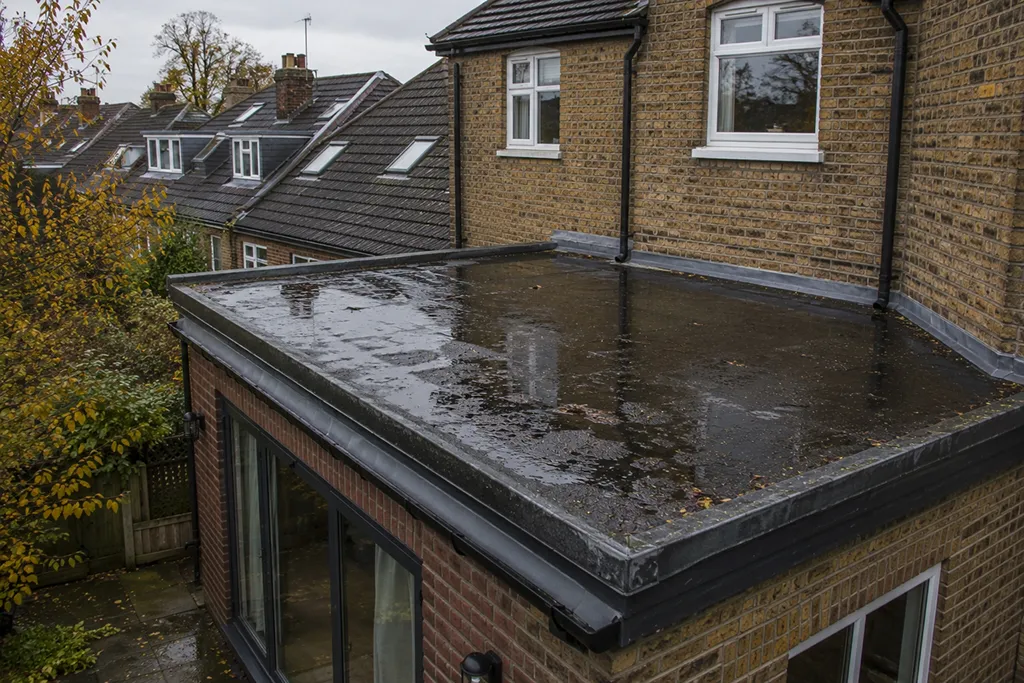
One of the clearest warning signs is ponding water on a flat roof. A small amount of water immediately after rain is not always unusual, but if it remains for an extended period, the roof may not be draining correctly.
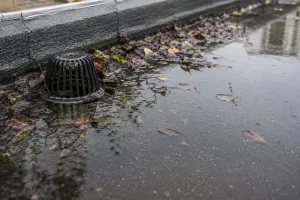
Persistent puddles can indicate blocked outlets, inadequate roof falls or localised depressions in the roof surface. For a closer look at the causes and possible solutions, read our guide to flat roof ponding water and how to address it.
Repeated ponding is worth investigating, particularly if water remains for long periods or the roof covering is already damaged. The risk depends on the waterproofing system, the condition of its joints and the roof’s drainage design.
Overflowing gutters and downpipes
A roof may not be draining properly simply because the water has nowhere to go once it reaches the gutter line. Blocked gutters and downpipes are one of the most common reasons rainwater starts backing up and overflowing.
If water is spilling over the gutter edge rather than flowing into the outlets, the roof drainage system is already under strain. In heavy rain, this can quickly affect fascias, soffits, walls and even the edges of the roof structure.
Water collecting in valleys and low points
Roof valleys handle a large amount of runoff, so if debris starts collecting there or if the valley lining begins to fail, water can slow down, pool or back up under nearby tiles.
Where debris repeatedly accumulates in a roof valley, the problem may involve more than a simple blockage. Our guide to roof valley repair and its warning signs explains when damage to valley linings or surrounding tiles may require professional attention.
Low spots in flat roofs and problem areas around junctions can behave in a similar way.
Exterior staining and damp patches
Another useful warning sign is staining on outside walls below the roofline. If water is overflowing or escaping where it should not, it often leaves visible marks on brickwork, render or painted surfaces.
You may also notice damp patches indoors, especially near the roof edge, around window heads or in upper rooms after periods of heavy rain. These are signs that poor drainage may already be starting to affect the wider property.
Why poor roof drainage often gets worse in autumn
Autumn conditions make roof drainage problems harder to ignore. There is more debris, more frequent rainfall and less opportunity for wet areas to dry out properly. Once gutters, valleys and outlets start struggling, the problem tends to become progressively worse as the season continues.
Persistent moisture and repeated heavy rainfall can also make existing roofing defects more troublesome. Our article on why small roof problems get worse in autumn explains how seasonal conditions can turn minor weaknesses into more serious repair issues.
Common causes of poor roof drainage
Several different defects can contribute to drainage problems after heavy rain.
These include:
- blocked gutters and downpipes
- leaves, moss and debris in valleys
- poor fall on flat roofs
- ageing or failing membrane surfaces
- slipped tiles interfering with runoff
- damaged or undersized outlets
- localised sagging or movement in the roof structure
In many cases, the problem is not just one thing. A roof may have a slight drainage weakness already, and then debris or ageing materials make the effect more noticeable.
What should homeowners look at after heavy rain?
Without climbing onto the roof, homeowners can still check several useful signs safely from ground level or from inside the loft.
Look for:
- gutter overflow or dripping joints
- watermarks on fascias and soffits
- damp patches upstairs
- standing water on flat roofs that can be seen safely from ground level or an upstairs window
- blocked outlets or downpipes
- roof sections that appear to stay dark and wet for longer
If you notice the same issue after more than one heavy rainfall, it is worth getting the roof checked properly.
What should not be ignored?
The following signs should never be dismissed as minor if they keep recurring:
- repeated overflow after rain
- standing water that does not clear
- internal staining after storms
- damp smells in upper rooms or loft spaces
- blocked drainage that returns quickly
- visible sagging or low spots on flat roof areas
These symptoms usually mean the roof is not handling water efficiently and that the risk of future leaks is increasing.
When to arrange a professional inspection
If you suspect your roof is not draining properly after heavy rain, it is best to arrange an inspection before wetter weather causes more widespread damage.
This matters especially if:
- the roof has leaked before
- the guttering is already under pressure
- the property has nearby trees
- a flat roof is holding water regularly
- valleys are collecting debris or staining nearby areas
The Met Office advises homeowners to clear their gutters and downpipes as fallen leaves can obstruct drainage and cause rainwater to overflow onto the property. Keeping gutters and outlets clear is an important part of reducing drainage problems during autumn and winter.
Final thoughts
Heavy rain is often when drainage problems finally become visible. Overflowing gutters, ponding water, damp patches and slow runoff are all signs that the roof may not be moving water away as effectively as it should.
The sooner these warning signs are identified, the easier it is to stop a drainage issue turning into a more expensive leak or structural problem. If your roof seems to struggle after heavy rainfall, it is worth getting it checked before the next spell of wet weather makes the situation worse.