







When a Small Ceiling Stain Means a Bigger Roofing Problem
A small ceiling stain is easy to dismiss at first. Many homeowners assume it is old damage, condensation or something minor that can wait. In some cases that may be true, but often a stain on the ceiling is one of the first visible signs that water is getting in somewhere above.
The problem is that by the time a stain shows indoors, the water may already have travelled through several layers of the roof structure before becoming visible. What looks like a small cosmetic issue on the ceiling can sometimes point to a much larger roofing problem involving flashing, tiles, underlay, valleys or roof drainage.
For homeowners in London, Greater London and Essex, this matters especially during autumn and winter, when prolonged rain makes hidden weak points more likely to show themselves. If the roof has already been under seasonal pressure, this article should link naturally to Why Small Roof Problems Get Worse in Autumn, because ceiling stains are often one of the first indoor signs that a roof issue has started getting worse.
Why a ceiling stain can be misleading
One of the biggest problems with ceiling stains is that the visible mark is not always directly below the source of the leak. Water can travel along timbers, underlay, insulation and plasterboard before it finally appears inside the room.
That means the stain itself does not necessarily tell you exactly where the roofing issue is. A stain near one wall or ceiling corner may actually be linked to a defect higher up the roof, around a chimney, roof window, valley or flashing detail.
This is why ceiling stains should never be judged on appearance alone.
What can cause a small ceiling stain?
There are several possible causes, and some are much more serious than others.
Common causes include:
- slipped or cracked roof tiles
- failing chimney flashing
- worn lead flashing around roof junctions
- leaking valleys
- roof membrane or felt failure
- blocked gutters causing water to back up
- leaks around skylights or roof windows
- condensation in the loft or roof space
Sometimes the stain is caused by one isolated defect. In other cases, it is a sign that the roof has more than one weakness allowing moisture to get through.
When a stain is more likely to mean a roofing problem
A stain is more likely to point to a roof problem when:
- it appears or grows after rain
- it gets darker during wet weather
- it is near an external wall or chimney breast
- there is a damp smell in the loft or upstairs room
- the paint begins bubbling or peeling
- the stain keeps returning after being redecorated
- there are other signs of damp or roof issues nearby
If the mark seems to react to weather conditions, it is especially important not to ignore it.
Why stains often appear after wet weather
A small ceiling stain may seem to appear suddenly, but in reality the underlying defect may have been there for quite some time. Prolonged rain simply gives water more chance to get through the weak point and spread far enough to become visible indoors.
That is one reason this section should link naturally to Chimney Flashing Problems in Wet Weather: What to Watch For, because rain-related flashing defects are a common reason stains begin appearing around chimney areas after sustained wet weather.
The same logic applies to valleys, skylights and blocked drainage points.
Why a small stain can indicate hidden damage above
The visible stain on the ceiling is often only the last part of the story. Before the mark appears, water may already have affected:
- loft insulation
- plasterboard
- roof timbers
- battens
- felt or membrane
- decorative finishes
That hidden spread is why a small stain can mean a bigger roofing problem. The indoor mark may still look minor while the moisture above has already affected a wider area.
What warning signs should homeowners look for?
A ceiling stain is more concerning when it appears alongside other signs.
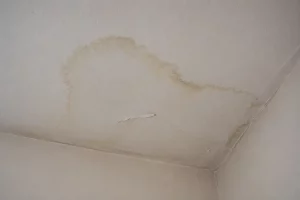
These include:
- damp smells upstairs
- visible mould around the stained area
- bubbling paint or cracked plaster
- dripping during heavy rain
- discolouration near chimney breasts
- damp loft insulation
- repeated stains in the same room
- watermarks that slowly expand over time
These signs suggest the problem is active rather than historic.
Can a ceiling stain be caused by condensation instead?
Yes, sometimes it can. Not every ceiling stain is automatically caused by a roofing defect. Condensation in loft spaces and poorly ventilated areas can also cause damp marks, especially during colder months.
However, condensation and roof leaks are often confused, which is why inspection matters. If there is any uncertainty, it helps to check whether the stain worsens after rainfall, whether the loft smells damp, and whether any roof defects are visible externally.
This is a natural place to link to How to Tell If Your Roof Felt or Membrane Is Failing, because waterproofing defects above the ceiling can sometimes be the hidden cause of recurring indoor staining.
Why simply repainting the stain is not enough
Many homeowners cover the stain, wait a while and hope it does not come back. That rarely solves the actual issue. If water is still getting in, the stain usually returns, often larger than before.
Repainting can hide the warning sign temporarily, but it does nothing to stop ongoing moisture affecting the roof structure or internal finishes.
When should you act?
It is worth arranging an inspection if:
- the stain appeared recently after rain
- it is growing or darkening
- it has returned more than once
- there are signs of damp in the loft
- nearby chimney, flashing or gutter issues are also present
- you are unsure whether the cause is condensation or roof ingress
The earlier the cause is identified, the better the chance of limiting the damage and keeping repair costs lower.
What parts of the roof should be checked?
If a small ceiling stain suggests a bigger roofing problem, the inspection usually needs to look beyond just the room below.
Relevant roof areas often include:
- flashing around chimneys
- valleys and roof junctions
- roof windows and skylights
- slipped or cracked tiles
- underlay and felt condition
- gutters and drainage points
- loft insulation and timbers
For broader industry guidance on spotting roof defects early and maintaining vulnerable areas, readers can also refer to NFRC advice on roof maintenance.
Final thoughts
A small ceiling stain may look minor, but it should never be dismissed too quickly. In many cases, it is the first visible clue that water is already getting into the roof structure somewhere above.
The good news is that early investigation can often prevent a much larger repair later on. If you have noticed a stain that seems to worsen after rain, keeps coming back or appears alongside other signs of damp, it is worth getting the roof checked before the problem spreads further.
If you are unsure whether a ceiling stain points to a bigger roofing problem, Rainy Days Roofing can inspect the roof and recommend the most suitable next step.