

Chimney Flashing Problems in Wet Weather: What to Watch For
Chimneys are one of the most exposed parts of any roof, so it is no surprise that problems often begin showing up around them once wetter weather arrives. When rain becomes more frequent, weak points in the flashing around a chimney can quickly turn into visible leaks, damp patches and internal staining.
The reason is simple. Chimney flashing sits at a critical junction where the roof covering meets the side of the chimney stack. If that junction is no longer sealed properly, rainwater can work into the gap and start affecting the roof structure below. In dry weather, the problem may stay unnoticed for a while. In wet weather, it often becomes much more obvious.
For homeowners in London, Greater London and Essex, autumn is often when previously unnoticed flashing defects begin to reveal themselves. Chimney flashing is particularly vulnerable where ageing materials, deteriorating pointing or poor installation allow rainwater to penetrate the roof junction. Our guide to why small roof problems get worse in autumn explains how prolonged wet weather can make existing defects more troublesome.
What does chimney flashing actually do?
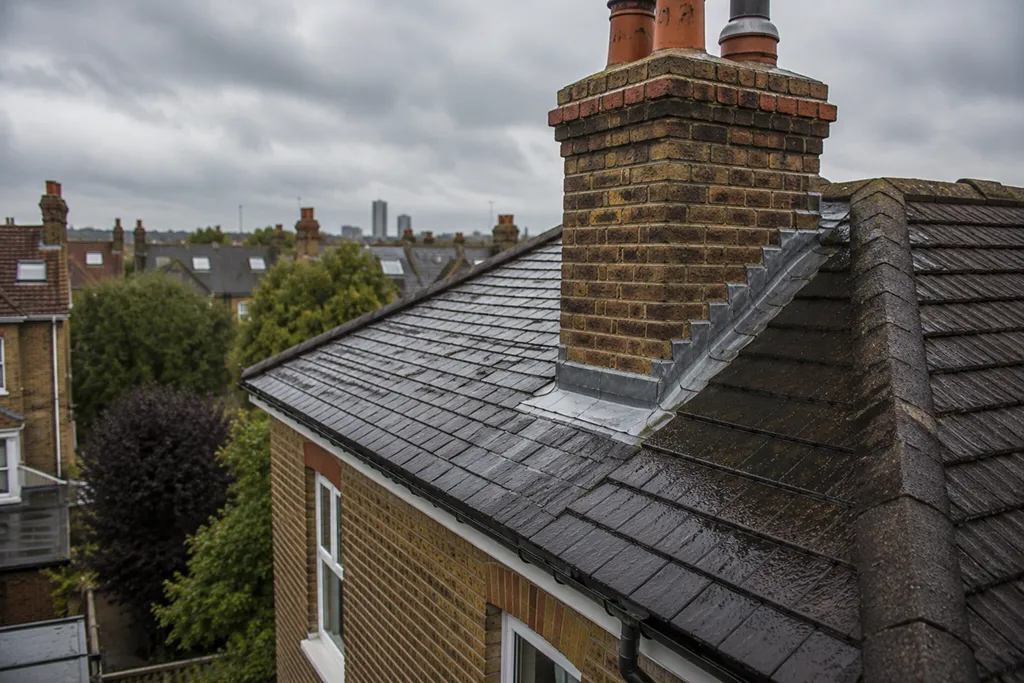
Chimney flashing is there to create a watertight seal between the chimney stack and the surrounding roof covering. Without it, rainwater could easily work its way into one of the most vulnerable roof junctions.
Flashing is usually formed from lead or another weather-resistant material and fitted in sections around the base of the chimney. When installed and maintained properly, it helps direct rainwater away and prevents it getting beneath the tiles, slates or underlay.
Because the chimney interrupts the normal run of the roof, this area relies heavily on the flashing doing its job properly.
Why chimney flashing problems often appear in wet weather
Some flashing defects are already present long before the homeowner notices them. The reason they often become obvious in wet weather is that repeated rainfall puts the whole junction under more pressure.
During prolonged rainfall, water flows around the chimney and across its flashing for extended periods. Any splits, gaps, lifted sections or deteriorating mortar joints can provide an entry point for moisture, particularly when strong winds drive rain against the chimney stack.
Wet weather also makes it easier for moisture to track into hidden areas. A defect that causes only a small amount of ingress during light rain may become much more noticeable during prolonged or wind-driven rainfall.
Common chimney flashing problems in wet weather
There are several issues that tend to show up once autumn rain becomes more regular.
Lifted or loose flashing
If part of the flashing has lifted away from the chimney or roof surface, water can enter underneath it. Wind and age-related movement often make this worse over time.
Cracked or split lead
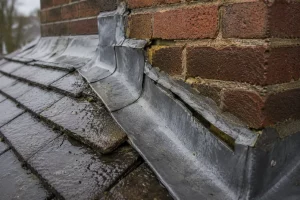
Lead flashing is durable, but it can still crack, split or fatigue with age. Once that happens, the waterproof seal is compromised and rainwater can start entering through the damaged section.
Lead flashing can deteriorate through repeated thermal movement, poor installation and general weathering. Understanding why lead flashing fails and when it needs replacing can help homeowners recognise when a small repair may be sufficient and when more extensive work is needed.
Failing mortar or pointing
In some cases, the flashing itself remains sound, but the mortar pointing that seals the joint where the flashing enters the chimney brickwork has deteriorated. Cracked or missing pointing can allow rainwater to penetrate behind the flashing, particularly during prolonged or wind-driven rainfall.
Poor past repairs
Temporary sealants and patch repairs often fail during wet weather. A chimney that was previously “made good” with a short-term fix may start leaking again once rainfall becomes more persistent.
Warning signs homeowners should look for
The signs of chimney flashing problems in wet weather are often fairly recognisable once you know what to look for.
Common warning signs include:
- damp patches near the chimney breast
- water staining on upstairs ceilings
- staining or bubbling paint near chimney areas
- leaks appearing during heavy or prolonged rain
- visible gaps around the chimney flashing
- loose or lifted lead around the base of the chimney
- deteriorating mortar where the flashing meets the brickwork
- recurring damp smells in upper rooms or loft spaces
If these issues appear after rainfall and seem connected to the chimney area, the flashing is one of the first things worth checking.
Why chimney flashing leaks are easy to misdiagnose
One of the difficulties with chimney leaks is that the internal signs do not always appear directly next to the real source of the problem. Water may enter around the flashing and then travel before it becomes visible indoors.
That is why homeowners sometimes assume the chimney itself is leaking, when the real issue is the flashing, the pointing around it, or nearby roof details.
Water ingress around a chimney can also result from deteriorating brickwork, damaged mortar joints or defective flaunching at the top of the stack. Our guide to chimney repairs in London and the warning signs homeowners should not ignore explains these problems and when professional attention may be necessary.
Why wet weather makes the problem worse
Once flashing starts failing, repeated rain can quickly increase the extent of the damage. Water does not need a large opening to cause trouble. If it is being driven repeatedly into the same weak spot, even a small defect can lead to:
- wet timbers
- damp insulation
- stained ceilings
- damage to plaster and decorations
- worsening deterioration around the chimney base
The longer that continues, the more likely it is that what began as a flashing repair turns into a wider roofing job.
What homeowners should not ignore
The following should always be taken seriously, especially in autumn and winter:
- leaks that only appear during rain
- damp patches around chimney breasts
- visible lead movement or lifting
- cracked pointing around flashing lines
- recurring staining after wet weather
- temporary patch repairs that keep failing
These are all signs that the roof junction around the chimney may no longer be performing as it should.
Can chimney flashing problems be repaired?
In many cases, yes. If the problem is caught early, localised repairs may be enough. That might involve re-dressing lead flashing, re-securing loose sections, repairing pointing or replacing a failed part of the flashing detail.
However, where the flashing is old, badly installed, split in multiple places or part of a wider chimney issue, a more substantial repair may be needed.
The important thing is to identify whether the issue is isolated to the flashing or whether it is tied to a broader chimney or roof defect.
When to arrange a professional inspection
If you notice leaks or damp appearing around the chimney area during wet weather, it is worth arranging an inspection before the damage spreads further.
This matters especially if:
- the chimney has leaked before
- staining returns after every period of rain
- the flashing already looks loose or worn
- the chimney stack is older and exposed
- patch repairs have failed previously
Historic England’s property maintenance checklist recommends checking that roof flashings remain securely fixed around chimneys and that the joints are in good condition. These checks are particularly relevant for older London properties, where traditional leadwork and masonry can deteriorate over time.
Final thoughts
Chimney flashing problems often become most obvious in wet weather because repeated rainfall puts vulnerable roof junctions under constant pressure. A small defect that seems harmless in dry conditions can quickly turn into a leak once autumn rain arrives.
The good news is that these problems are usually much easier to deal with when caught early. If you have noticed damp patches, staining or signs of water ingress around the chimney, it is worth getting the area checked before the next spell of bad weather makes things worse.
If you are unsure whether the problem is coming from chimney flashing, Rainy Days Roofing can inspect the roof and recommend the most suitable next step.