
When to Repair or Replace Fascias, Soffits and Guttering
Fascias, soffits and guttering do more than tidy up the look of a property. They help protect the roofline, support effective drainage and reduce the risk of moisture getting into the structure of the home. When these elements begin to fail, the damage is not always obvious at first. Small cracks, leaking joints or peeling surfaces may seem minor, but they can lead to bigger maintenance problems if they are ignored.
For homeowners in London, Greater London and Essex, the key question is usually whether repair work will be enough or whether full replacement is the better long-term option. The answer depends on the age of the roofline, the material in place, the extent of the damage and whether the problems are isolated or recurring.
If you have already had problems with blocked drainage or overflowing rainwater, it is worth reading how poor gutter maintenance affects your roof and foundation first, as poor gutter performance often sits at the centre of wider roofline issues.
What fascias, soffits and guttering actually do
Before deciding whether repair or replacement is the better route, it helps to understand the role each part plays.
Fascias are the boards fixed along the lower edge of the roof. They support the bottom row of tiles and carry the guttering. Soffits sit underneath the fascia boards and help protect the roof overhang while also improving ventilation to the roof space in some systems. Guttering collects rainwater and carries it safely away from the building.
When one part starts to fail, the others are often affected too. A leaking gutter can stain or rot fascia boards. Failing fascias can leave guttering unstable. Poor soffit condition can allow moisture or pests into roof voids.
When repair is often enough
In many cases, localised repairs are perfectly sensible. If the problem is limited, caught early and the rest of the system is still in reasonable condition, targeted work can extend the life of the roofline without the cost of full replacement.
Repair may be enough when:
- one or two gutter joints are leaking
- a short section of guttering is cracked or misaligned
- paint is peeling but the timber beneath is still sound
- a small area of fascia has minor surface damage only
- a soffit vent or section has come loose without wider deterioration
- the rest of the roofline is structurally sound and not near the end of its life
Where blocked leaves or debris are the main problem, a thorough clean may be all that is needed. Our guide to cleaning and maintaining your gutters before the rainy season explains how regular maintenance can help prevent recurring blockages.
Signs that simple repairs may not be enough
There comes a point where patching isolated areas stops being cost-effective. If you keep repairing one problem only for another to appear nearby, replacement often becomes the smarter option.
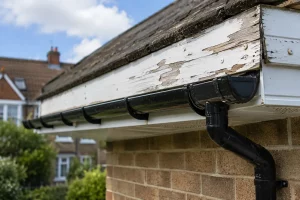
Warning signs that repairs may no longer be enough include:
- repeated leaks from different gutter sections
- timber fascias that feel soft or show signs of rot
- sagging gutter runs or brackets pulling away
- visible staining on external walls from overflowing water
- multiple cracked joints, corners or unions
- soffits with ongoing moisture damage, mould or gaps
- evidence that rainwater is affecting the roof edge or brickwork
At that stage, the issue is no longer just cosmetic. It becomes about protecting the wider structure of the property.
When replacement makes more sense
Replacement usually makes more sense when the system is ageing, failing in several places or likely to keep costing money through repeated repairs. It can also be the better choice if the existing materials are outdated or hard to maintain.
Replacement is often the better option when:
- timber fascias or soffits are rotting
- guttering has become brittle, warped or unreliable
- there are several repair points across the same elevation
- joints keep leaking even after previous work
- the roofline no longer drains effectively in heavy rain
- the overall appearance has deteriorated significantly
- you want a longer-term, lower-maintenance solution
If moisture has already spread beyond the roofline, the problem may involve damaged tiles, flashing or other roofing components. Our guide to common roof repairs in London explains the warning signs and the types of repairs homeowners may need.
Timber vs uPVC: why the material matters
The decision between repair and replacement also depends on what material is currently installed.
Timber rooflines can often be repaired in small sections if the damage is minor and caught early. However, once rot spreads, replacement becomes more practical. uPVC systems usually need less maintenance, but older plastic guttering and trims can still crack, distort or fail at the joints over time.
For many homeowners, replacement becomes more attractive when they want to move from a high-maintenance timber system to something more durable and lower-maintenance.
Why putting it off can cost more later
Many people delay roofline work because the problem seems manageable. The danger is that leaking or unstable fascias, soffits and guttering can allow water to affect other parts of the property over time.
That can lead to:
- damp external walls
- damage to roof edges and rafters
- staining and moisture ingress internally
- greater repair bills later
- avoidable wear to brickwork and pointing
The longer the issue is left, the more likely it is that a relatively straightforward roofline job becomes part of a wider repair project. Regular inspections can help identify these problems before they become more expensive to resolve. Find out why regular roof inspections save you money in the long run.
What a professional inspection should look for
A proper inspection should not just focus on one leak or one cracked section. It should look at the roofline as a complete system.
That includes checking:
- the condition of fascia boards and fixings
- the state of soffits and any vents
- gutter alignment and fall
- leaking joints and outlets
- signs of overflow or staining
- whether the roof edge has been affected
- whether repair would be reliable or only temporary
Effective rainwater drainage is essential for protecting a property’s roofline, walls and foundations. The UK Government’s Approved Document H on drainage and waste disposal provides guidance on drainage requirements for buildings.
Repair or replace: what makes most sense for your home?
There is no one-size-fits-all answer. If the problem is small and localised, repair is often the most sensible option. If the system is ageing, failing in several places or already affecting the rest of the property, replacement usually makes better financial sense in the long term.
The right decision comes down to condition, not guesswork. That is why a proper inspection matters before spending money on repeated patch jobs that may not last.
Final thoughts
Fascias, soffits and guttering are easy to overlook until something starts leaking, sagging or rotting. By that point, many homeowners are left deciding whether to keep repairing bits and pieces or invest in a longer-term fix.
In general, small isolated issues can often be repaired successfully. But when defects are repeated, widespread or already affecting the structure around them, replacement tends to make more sense.
If you are unsure whether your fascias, soffits and guttering need repair or full replacement, Rainy Days Roofing can inspect the roofline and recommend the most suitable option.